




Table of Contents
- How Students Eat in Thessaloniki (The Basics)
- Core Student Food Zones
- Daily Budget Expectations
- Essential Local Foods Every Student Learns Quickly
- Markets, Bakeries, and Everyday Supplies
- Dietary Flexibility and Adaptation
- Food as Part of Student Integration
- When Do People Eat in Thessaloniki?
- Average Daily Student Food Budget
- Takeaway & Delivery Culture (Very Important)
- What Students Actually Choose (Safe & Popular Options)
- Bougatsa as a Social Ritual (Not Just Food)
- Vegetarian, Vegan & Dietary Adaptation
- Halal & Light Food – A Practical Student Reference Point
- Cultural Rulebook (Unwritten but Important)
This guide is designed as a practical orientation tool for international students arriving in Thessaloniki. Its purpose is not to showcase gastronomy at a touristic level, but to explain how, where, and at what cost students actually eat in the city. Thessaloniki is food-friendly, budget-conscious, and flexible — once you understand the local logic.
How Students Eat in Thessaloniki (The Basics)
In Thessaloniki, meals are informal, frequent, and often eaten outside the home. Students rarely follow strict meal schedules. Instead, eating is built around availability, location, and social flow.
Street food, takeaway, and quick-service shops dominate daily routines. Sitting down at a restaurant is common, but not required to eat well or affordably. Portions are generous, prices are relatively low by European standards, and food options are widely distributed across the city center.
Core Student Food Zones
Around the Rotunda area, food options are optimized for speed and price. Pizza by the slice, sandwiches, and quick snacks are available throughout the day and evening. This zone is heavily used by students due to proximity to universities and study spaces. Eating here is functional, fast, and inexpensive.
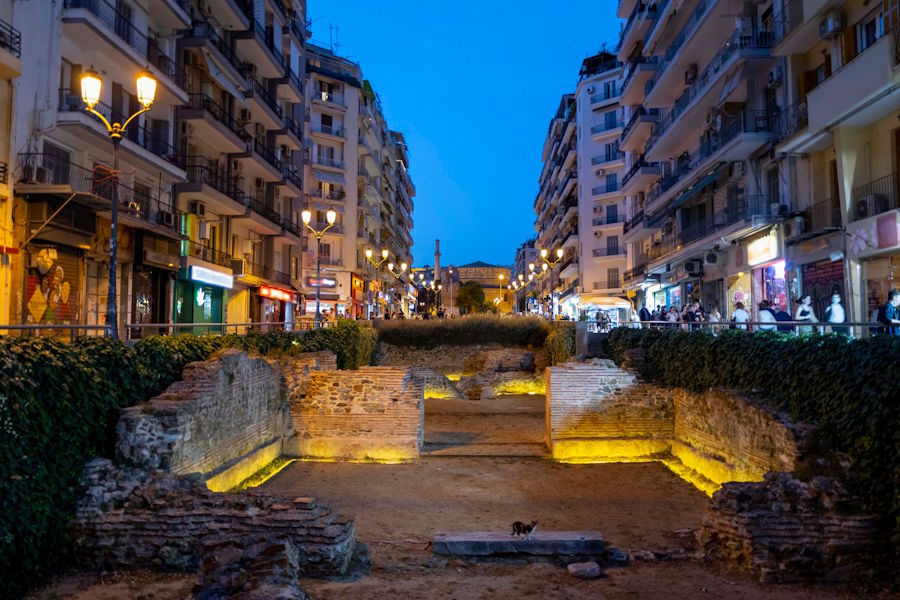
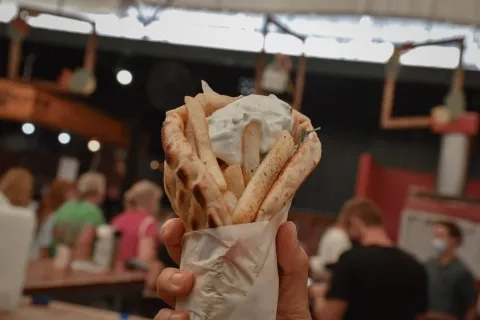
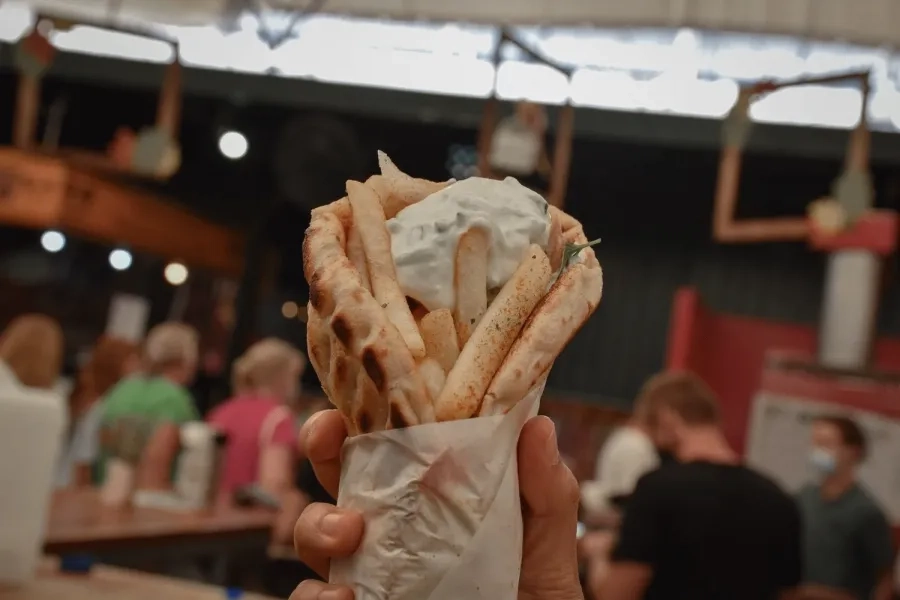
The Navarinou Square area, especially along Dimitriou Gounari Street, is one of the most student-oriented food corridors in the city. It offers the widest variety of low-cost options in a compact space. Gyros, souvlaki, crepes, falafel, vegetarian meals, and salads coexist side by side. This area is a default choice for lunch, casual dinners, and group meals.
In Ladadika, food follows nightlife. After midnight, several fast-food and takeaway spots remain open until early morning hours. For students, this area becomes relevant after social events, late study sessions, or weekend outings. Late-night eating is normal and culturally accepted.
Daily Budget Expectations
A realistic daily food budget for a student in Thessaloniki is manageable:
-
Street food or takeaway meals typically cover most daily needs
-
Snacks such as baked goods or bread rings cost less than one euro
-
One full, filling meal per day is often enough due to portion size
Cooking at home is an option, but many students rely on eating out due to low prices and convenience, especially during the first months of their stay.
Essential Local Foods Every Student Learns Quickly
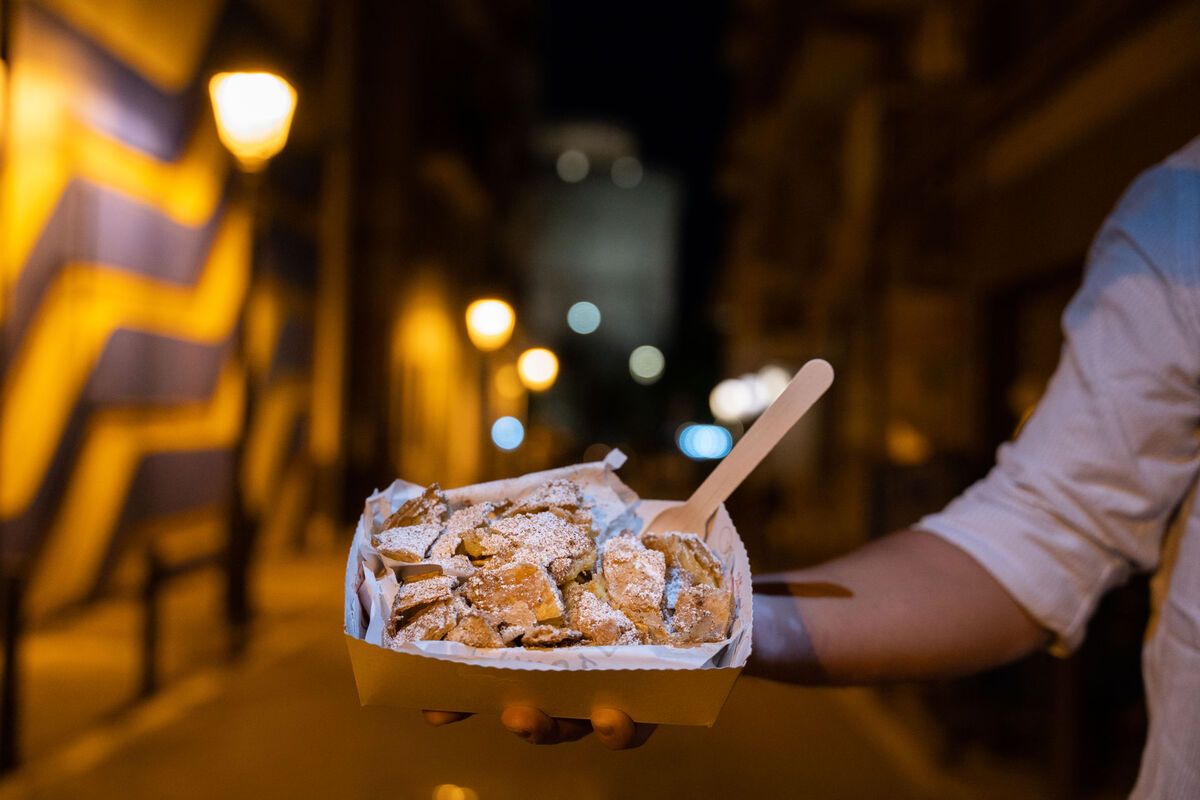
Bougatsa is one of the first foods international students encounter. It is a pastry made with thin layers of dough and filled either with sweet cream or cheese. Traditionally eaten in the morning, it is also consumed throughout the day. Bougatsa shops are common, and ordering it becomes part of daily routine rather than a special occasion.
Koulouri is the most common snack in Thessaloniki. This sesame-covered bread ring is sold by street vendors and bakeries across the city, usually costing between 0.50 and 1 euro. Students use it as a quick breakfast, a walking snack, or a light meal between activities.
Trigono panoramatos is a well-known local dessert. Its triangular shape, crispy pastry, and cream filling make it a signature sweet of the city. While not eaten daily, it is often tried early on as part of cultural familiarization.
Markets, Bakeries, and Everyday Supplies
Traditional markets play an important role in Thessaloniki’s food culture, even for students who do not cook regularly. The most active and accessible example is Kapani Market, located in the historic city center.
Kapani Market is a dense, everyday market where locals buy fresh produce, spices, cheese, olives, and basic food supplies. Many students visit Kapani not necessarily to shop, but to observe prices, ingredients, and local habits. It functions as an informal introduction to how food is selected, discussed, and valued in the city.
Bakeries are equally central to daily student life and are found on almost every street. They offer affordable bread, pastries, savory pies, and quick meals throughout the day. For many students, bakeries replace home cooking, especially during busy academic periods, providing a reliable and low-cost food solution.
Together, Kapani Market and neighborhood bakeries form the backbone of everyday food access in Thessaloniki, supporting a lifestyle that is flexible, affordable, and well suited to student routines.
Supermarkets are widely available, but students often combine supermarket shopping with bakery and street food purchases rather than relying on a single source.
Dietary Flexibility and Adaptation
Thessaloniki is accommodating to different dietary needs without formal labeling. Vegetarian options are common, especially in street food areas. Salads, legume-based dishes, and meat-free meals are easily found. International influences mean that Middle Eastern and Mediterranean cuisines are integrated into daily offerings, increasing flexibility for students from diverse backgrounds.
Food as Part of Student Integration
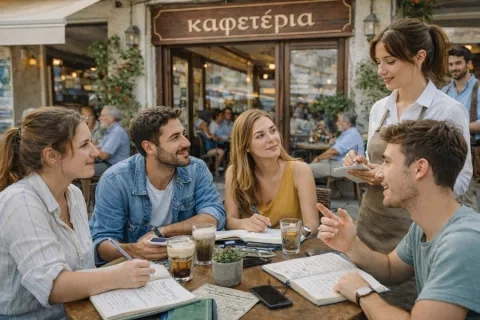
For international students, food in Thessaloniki functions as a social connector. Eating happens during study breaks, after classes, on evening walks, and late at night. Sharing food is informal and spontaneous, lowering social barriers and accelerating integration into local student life.
Understanding where and how to eat removes one of the main anxieties of settling into a new city. Thessaloniki’s food culture supports independence, affordability, and ease of adaptation — key factors for a successful student experience.

When Do People Eat in Thessaloniki?
Thessaloniki follows a late and flexible eating rhythm, which is essential for students to understand early on.
-
Morning (07:00–11:00)
Light and fast. Most students eat bougatsa or koulouri, often standing or walking. Breakfast is practical, not social. -
Midday (13:00–16:00)
Main daily meal for many students. Gyros, souvlaki, pizza slices, or takeaway meals are common. Portions are large enough to cover most of the day. -
Evening (20:00–22:30)
Social eating time. Students eat casually with friends, often sharing food. Sitting down is optional; takeaway remains normal. -
Late Night (after 23:00)
Food is still available. Especially around Navarinou and Ladadika, late-night eating after studying or going out is part of normal city life.
Key insight:
Skipping formal meals is normal. Eating twice a day is common and socially acceptable.
Average Daily Student Food Budget
Thessaloniki is considered student-budget friendly by Southern European standards.
-
Low-budget day: street food + bakery snacks
-
Normal student day: one full meal + snacks
-
Eating out daily is common, not a luxury
Students rarely cook every day during their first months. The city’s food infrastructure is designed to support eating outside without financial pressure.
Takeaway & Delivery Culture (Very Important)
Takeaway is not secondary — it is core to student life.
-
Almost all food is available to-go
-
Eating while walking, sitting on steps, or in small squares is normal
-
Sharing takeaway food with friends is common
Delivery platforms are heavily used, especially during exams or winter months. Ordering food is considered routine, not indulgent.
Cultural note:
No stigma exists around eating alone, eating late, or ordering food frequently.
What Students Actually Choose (Safe & Popular Options)
International students tend to converge quickly on a few “safe choices”:
-
Gyros or souvlaki wraps (reliable, filling, affordable)
-
Pizza slices (predictable and cheap)
-
Crepes (sweet or savory, flexible)
-
Falafel or salad bowls (especially for vegetarian students)
-
Bakery items for breakfast or light meals
These options minimize language barriers and ordering stress during the first weeks.
Bougatsa as a Social Ritual (Not Just Food)
For locals, bougatsa is not simply a pastry.
-
It is eaten without ceremony
-
Usually shared or discussed (“with cream or cheese?”)
-
Often consumed standing, early in the day
-
Associated with routine, not indulgence
For a foreign student, adopting bougatsa early signals cultural alignment. Knowing how and when to eat it matters more than knowing what it is.
Vegetarian, Vegan & Dietary Adaptation
Thessaloniki is quietly flexible, even without explicit labeling.
-
Vegetarian options are common in street food areas
-
Salads, legume-based dishes, and meat-free meals are widely available
-
Vegan options exist, though not always labeled as such
-
Middle Eastern food increases plant-based availability
Halal & Light Food – A Practical Student Reference Point
Falafel, salads, cheese pies, and bakery items are commonly chosen by students seeking lighter or culturally compatible options.
For students seeking halal, lighter, or culturally compatible food options, a reliable reference point in the city center is HAYAT Little Istanbul, located at P. Patron Germanou 23.
HAYAT Little Istanbul operates as a café–restaurant offering halal-friendly dishes and lighter meal options that are frequently chosen by international students. Its menu profile and atmosphere make it especially suitable for students who prefer clear ingredient orientation and familiar food formats while adapting to the city.
Beyond food, HAYAT has developed into a functional student hub. On the upper floor, there is a dedicated quiet study and reading area where students regularly work independently or in small groups. Each table is equipped with power outlets, and the space is supported by optical fiber internet, making it suitable for extended study sessions, online classes, or focused reading.
From an operational perspective, this combination is significant:
students can eat, study, recharge devices, and remain in one location without pressure to leave quickly. This aligns closely with Thessaloniki’s informal but highly practical student culture, where cafés often double as study environments.
For newly arrived international students, HAYAT Little Istanbul functions not only as a food option, but as a safe, predictable, and study-friendly environment, reducing both dietary and daily routine uncertainty during the adaptation period.
Alerjen awareness:
Not always clearly labeled. Students typically ask directly or choose simple, known foods at first.
Cultural Rulebook (Unwritten but Important)
-
Understanding Thessaloniki’s unwritten food rules is essential for international students. These habits are rarely explained, yet they shape everyday life and social interaction. Adapting to them early significantly reduces stress and speeds up cultural integration.
-
Eating quickly is normal. Many students eat standing, walking, or between activities. Meals are often functional rather than ceremonial.
-
Eating late is normal. Dinner times start later than in many countries, and food availability extends well into the night. Late eating is socially accepted and routine.
-
Eating the same food often is normal. Students frequently rotate a small number of familiar meals. Variety is optional, not expected.
-
Sitting down is optional. A proper table and chair are not required to “count” as a meal. Steps, benches, and small squares are commonly used.
-
Sharing food builds social bonds. Offering bites, splitting takeaway, or ordering together is a natural way to connect, especially among students.
-
Food is not rushed, but it is also not formal. There is no pressure to hurry, yet no obligation to turn eating into an event.
-
Understanding these unwritten rules removes uncertainty and anxiety. For international students, food becomes not just nourishment but a tool for social inclusion, helping them feel comfortable, independent, and part of everyday life in Thessaloniki.