



Table of Contents
- What Is Immersion-Based Language Learning?
- Immersion vs. Translation-Based Teaching
- Why Thessaloniki Is Ideal for Greek Immersion
- The Role of Intensity: How Many Hours Per Week?
- Classroom Immersion and Urban Immersion
- Measuring Results: Does Immersion Work?
- Choosing an Immersion Program in Thessaloniki
- Final Reflections
- Immersion Pathways: Greek Programs in Thessaloniki
- One Pedagogical Model, Multiple Entry Points
Learning Greek as a foreign language often raises a fundamental methodological question: should instruction rely on translation and bilingual explanations, or is full immersion more effective? In recent years, immersion-based language learning has gained renewed attention, especially in cities that offer strong cultural and social integration opportunities. Among these, Thessaloniki has emerged as a particularly compelling environment for immersive Greek study.
This article examines what “Greek immersion” truly means, how it differs from translation-based teaching, and why Thessaloniki provides a uniquely supportive context for accelerated language acquisition.
What Is Immersion-Based Language Learning?
Immersion-based language learning refers to an instructional model in which the target language—Greek, in this case—is used as the primary medium of communication from the outset. Rather than relying on English (or another shared language) to explain grammar and vocabulary, teachers structure lessons so that meaning is conveyed through context, examples, gestures, visuals, and guided interaction.
The underlying theory is straightforward: languages are not simply systems of rules to decode; they are living systems acquired through exposure, pattern recognition, and repeated meaningful use. When learners are consistently exposed to Greek in authentic communicative situations, their brains begin to process structures more automatically.
Immersion does not eliminate grammar instruction. Instead, grammar becomes contextualized. Rules emerge from use rather than preceding it. The learner’s attention shifts from translation to comprehension and production.
Immersion vs. Translation-Based Teaching
Translation-based instruction typically follows a linear sequence: explanation in the learner’s native language, followed by controlled exercises in the target language. This approach can provide initial clarity and may feel reassuring, especially for beginners.
However, research in second language acquisition consistently suggests that excessive reliance on translation slows spontaneous speech development. Learners often develop a mental “translation loop,” thinking in their native language first and then converting their thoughts into Greek.
Immersion, by contrast, encourages direct processing. Vocabulary and structures become associated with images, actions, and situations rather than equivalents in another language. Over time, this reduces hesitation and increases fluency.
That said, immersion is not a magic shortcut. Its effectiveness depends on several factors:
-
Consistency of exposure
-
Structured progression aligned with CEFR levels (A1–C2)
-
Opportunities for meaningful interaction
-
Learner motivation and tolerance for ambiguity
When properly implemented, immersion accelerates speaking confidence and listening comprehension more reliably than translation-heavy models.
Why Thessaloniki Is Ideal for Greek Immersion
Immersion thrives in environments where language extends beyond the classroom. This is where Thessaloniki offers a distinct advantage.
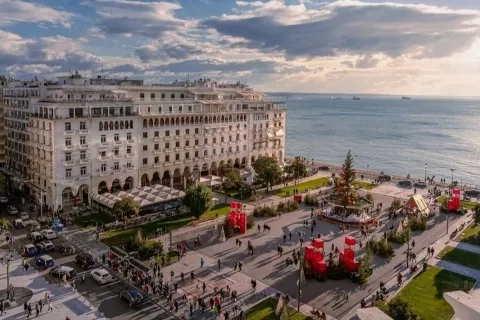
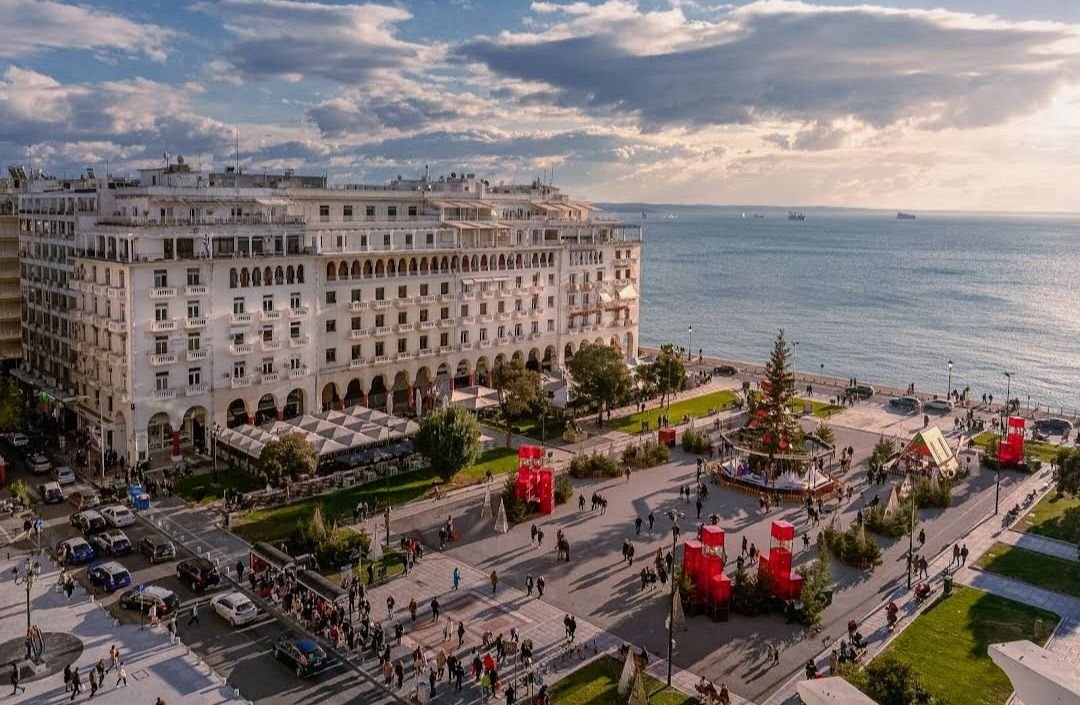
Unlike large metropolitan capitals that can feel overwhelming, Thessaloniki combines accessibility with cultural density. It is a university city, socially active, and compact enough that students quickly become familiar with daily routines. Markets, cafés, public services, and neighborhood interactions create frequent, manageable opportunities for real-world practice.
In immersion contexts, the city itself becomes an extension of the classroom. Ordering coffee, asking for directions, participating in local events, or attending cultural activities reinforces classroom input through authentic repetition.
This urban immersion effect matters. When learners hear and use Greek in natural settings within hours of structured lessons, retention improves dramatically. Language shifts from abstraction to lived experience.
The Role of Intensity: How Many Hours Per Week?
Another key question concerns weekly intensity. Is four hours enough? Is ten hours better?
There is no universal formula, but patterns are observable. Moderate intensity (for example, 4–6 hours per week) supports steady progression when combined with daily exposure outside class. Higher intensity (8–12 hours weekly) may accelerate structural familiarity but requires cognitive stamina and structured reinforcement.
In immersion settings, intensity must balance input and reflection. Too few hours reduce momentum; too many without processing can cause fatigue. Programs aligned with CEFR progression and divided into clear cycles (e.g., four-month levels) tend to produce more stable outcomes.
Classroom Immersion and Urban Immersion
Effective immersion in Thessaloniki often integrates two complementary dimensions:
Classroom immersion:
Greek is the working language. Teachers scaffold comprehension using visual cues, structured dialogue, and task-based activities. Grammar is embedded within communicative tasks rather than presented as isolated theory.
Urban immersion:
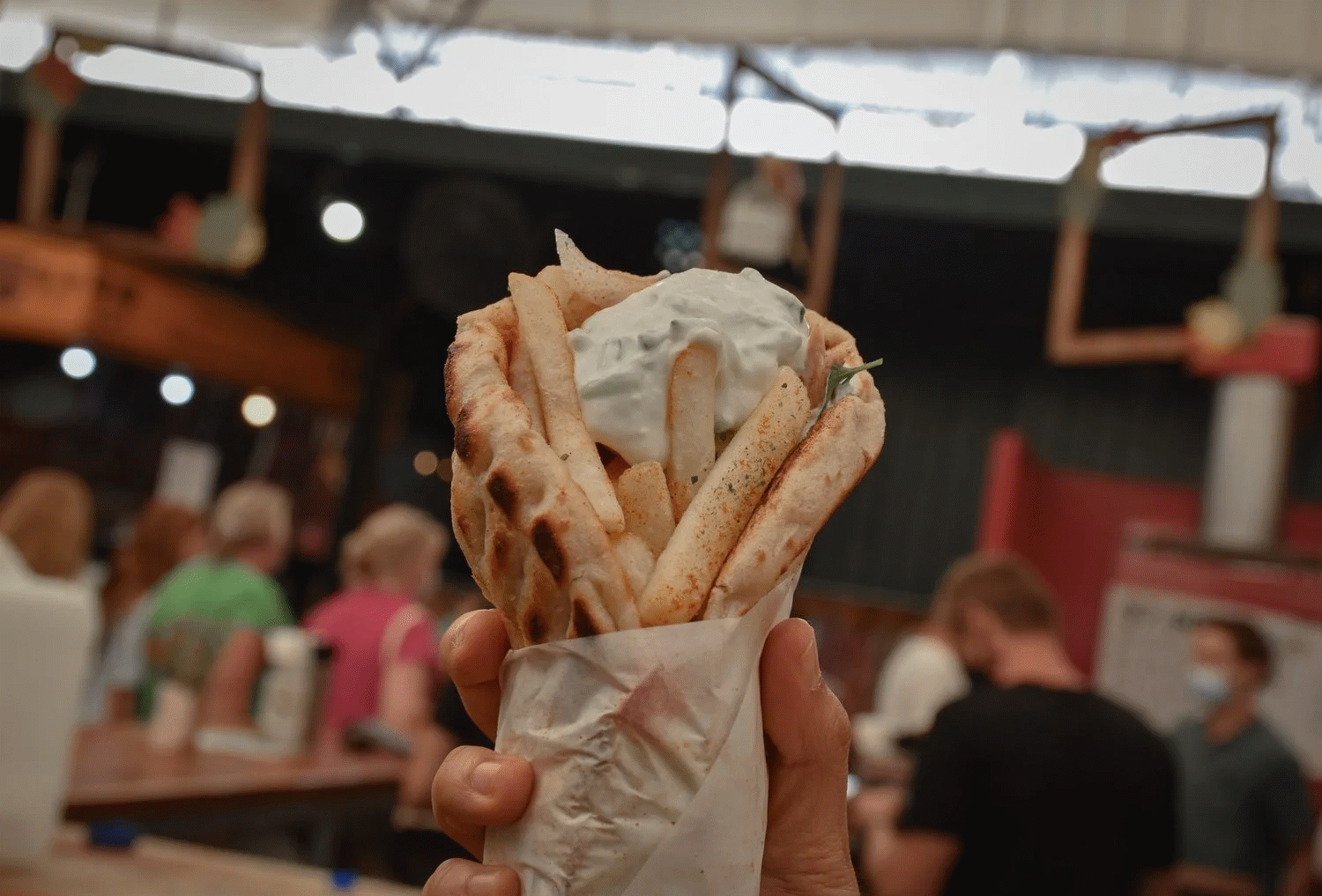
Learners are encouraged to interact with the city. Assignments may involve real-life tasks—short interviews, market visits, cultural events—that reinforce vocabulary and structures learned in class.
This dual approach creates reinforcement loops. The classroom introduces patterns; the city stabilizes them through repetition and unpredictability.
Measuring Results: Does Immersion Work?
Progress in immersion programs can be evaluated through:
-
CEFR level advancement
-
Increased spontaneous speech length
-
Reduced hesitation time
-
Improved listening comprehension in natural contexts
Many learners report a noticeable shift after the first several weeks: Greek stops feeling like a code to decipher and begins to feel like a usable tool.
It is important to emphasize that immersion does not eliminate difficulty. Greek remains structurally rich, with complex verb forms and case systems. What immersion changes is the learner’s relationship to that complexity. Instead of analyzing every form before speaking, students begin to internalize patterns through exposure and guided use.
Choosing an Immersion Program in Thessaloniki
When evaluating immersion-based Greek programs, consider the following:
-
Is Greek consistently used as the primary instructional language?
-
Are lessons aligned with CEFR standards?
-
Does the program integrate city-based or cultural experiences?
-
Is progression measurable and structured?
Some schools in Thessaloniki, including Philoxenia Greek Language School, organize their courses around immersion principles, combining structured classroom instruction with real-world interaction. The key is not the label “immersion” but the consistency of its application.
Final Reflections
So, does full immersion accelerate fluency in Greek?
In most cases, yes—provided it is structured, consistent, and supported by real-life interaction. Thessaloniki offers a uniquely balanced environment for this approach: socially active, culturally rich, yet approachable enough for meaningful daily practice.
Immersion is not about removing support. It is about redesigning support so that learners engage directly with the language rather than through a translation filter. When classroom immersion aligns with urban immersion, Greek becomes less of an academic subject and more of a lived experience.
For learners seeking not just knowledge about Greek but the ability to use it confidently, Thessaloniki provides both the setting and the structure for that transformation.
📊 CEFR Progression Under Immersion (Estimated Timeline)
Below is a typical progression framework for structured immersion-based Greek learning in Thessaloniki:
| CEFR Level | Typical Duration (Immersion Model) | Weekly Intensity | Primary Outcome |
|---|---|---|---|
| A1 | 3–4 months | 4–6 hrs/week | Basic everyday communication |
| A2 | +4 months | 4–8 hrs/week | Independent survival-level interaction |
| B1 | +4–6 months | 6–10 hrs/week | Functional conversational fluency |
| B2 | +6–8 months | 8–12 hrs/week | Professional and academic readiness |
| C1 | Variable (advanced refinement) | Intensive cycles | Near-native structural control |
Progression depends on consistency, exposure outside class, and structured curriculum alignment with CEFR standards.
Immersion Pathways: Greek Programs in Thessaloniki
Greek immersion in Thessaloniki is delivered through a structured ecosystem of programs designed for different durations, intensities, and learner profiles. Whether the goal is long-term academic progression, short-term cultural exposure, or seasonal intensive study, each program operates within the same immersion-based framework.
Long-Term Greek Programs
Learners seeking sustained CEFR progression can follow structured long-term pathways, including:
These formats provide consistent exposure, measurable advancement, and systematic development of speaking, listening, reading, and writing skills within an immersion environment.
Short-Term Programs
For students combining travel with language study, short-term immersion options include:
-
Study Holidays in Thessaloniki – 10-Day Greek & Culture (Urban Edition)
-
Survival Greek Course (2 Months) — Practical Greek for Everyday Life in Thessaloniki
These programs integrate classroom immersion with real-world interaction across the city, reinforcing communicative confidence in everyday contexts.
Seasonal Intensive Programs
Seasonal cycles allow immersion-based study aligned with specific timeframes:
Seasonal programs are ideal for Erasmus participants, professionals, and international learners planning temporary residence in Thessaloniki.
One Pedagogical Model, Multiple Entry Points
Regardless of format or duration, all programs operate within a unified immersion-based Greek learning model in Thessaloniki. Students may enter through different pathways, but progression remains aligned with CEFR standards, structured exposure, and real-life communicative activation.