



Table of Contents
- Seasonal Intensive Greek Programs – 4-Week Fast-Track Greek Courses
- What Are Seasonal Intensive Greek Programs?
- Who Are These Programs Designed For?
- Learning Philosophy & Educational Approach
- Program Structure & Duration
- Greek Language Levels & Progression
- Cultural Context & Local Integration
- Seasonal Focus: Spring · Autumn · Winter
- Seasonal Advantages for Language Learning
- Certification Orientation & Academic Continuity
- How Seasonal Programs Fit into the Overall Learning Path
- Why Learn Greek?
- Did You Know?
- Why Choose PHILOXENIA Greek Language School?
- Registration Process & Contact
- Why Thessaloniki?
- Seasonal Intensive Greek Programs
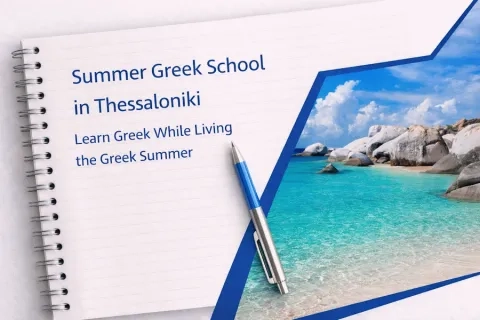
- Summer Greek School in Thessaloniki - Learn Greek While Living the Greek Summer
- ⏰ Class Schedule Class days: Monday to Friday
- 💶 Course Fee
- 📌 Booking & Reservation
- 💳 Booking & Confirmation
- 💰 Payment Terms
- 🔄 Cancellation & Refund Policy
- 🏦 Bank Charges
- ✅ Acceptance of Terms
- Seasonal Intensive Greek Programs – Dates & Sessions
- Registration by Season & Dates
- Seasonal Fast-Track Greek Courses in Thessaloniki – FAQs
Seasonal Intensive Greek Programs – 4-Week Fast-Track Greek Courses
Four-week fast-track, in-person Greek courses in Thessaloniki combining structured language instruction, experiential learning and cultural immersion.
Speaking practice · workshops · guided city walks · real-life Greek communication
€150 deposit · €450 balance
Learn Greek in Greece through structured, in-person language courses designed for international learners seeking real progress. Our Greek lessons in Thessaloniki combine intensive classroom instruction with cultural immersion, allowing students to practice Greek daily in authentic, real-life situations. Whether you are a beginner or an intermediate learner, these programs offer a clear learning path, experienced teachers and the opportunity to study Greek in one of Greece’s most vibrant cities, outside the crowded summer season.
Seasonal Intensive Greek Programs in Thessaloniki offer a focused, in-person fast-track language learning experience during spring, autumn and winter, combining structured classroom instruction with real-life cultural immersion. Designed for adult learners seeking measurable progress within a short timeframe, these programs provide clear level progression, authentic exposure to Greek daily life and a balanced academic rhythm in one of Greece’s most vibrant cities.
What Are Seasonal Intensive Greek Programs?
Seasonal Intensive Greek Programs are structured, short-term fast-track language courses designed for learners who wish to study Greek in Greece during specific periods of the year. They offer a focused learning experience with clear start and end dates, allowing participants to make measurable progress within a limited timeframe.
These programs run during spring, autumn and winter, when the pace of the city supports concentration, interaction and cultural immersion. They are positioned between short study holidays and long-term academic courses, providing an optimal balance between intensity, flexibility and real learning outcomes.
Who Are These Programs Designed For?
Seasonal Intensive Greek Programs are suitable for:
• Adults who wish to focus on Greek language learning during a specific season
• International residents or visitors staying in Greece for a limited period
• Learners who value in-person classroom interaction
• Students seeking structured learning with defined goals
• Individuals preparing for longer-term Greek studies
The programs are open to learners from A1 to B2, with placement based on an initial assessment.
Learning Philosophy & Educational Approach
Experience-Based Learning
The educational philosophy behind the Seasonal Intensive Greek Programs is grounded in experience-based learning. Greek is taught not only as a linguistic system, but as a living means of communication embedded in everyday life.
Participants learn through interaction, context and use, developing confidence and fluency by connecting language with real situations rather than isolated theory.
Classroom-Centered Instruction
Instruction is anchored in structured classroom teaching, ensuring direct contact with instructors, guided practice and continuous interaction among learners. Classroom learning is intentionally extended beyond the classroom through applied activities, experiential learning sessions and real-life language use in authentic social and cultural contexts. This integrated approach supports clear progression, practical confidence and consistent feedback throughout the learning process.
Program Structure & Duration
Seasonal Intensive Greek Programs follow a clearly defined structure with a fixed duration. This allows learners to plan their stay in Greece with confidence and to commit to a realistic learning goal.
The four-week fast-track format brings 60 teaching hours into a focused study period. It is suitable for adult learners who want to combine structured language study with cultural exploration.
Greek Language Levels & Progression
Available Levels (A1–B2)
The programs are offered at A1, A2, B1 and B2 levels, in accordance with the Common European Framework of Reference for Languages (CEFR).
Classes are organized by level to ensure homogeneous groups and effective progression.
Learning Outcomes After Completion
Upon completion of the program, participants:
• Complete one full CEFR level
• Improve communication skills across speaking, listening, reading and writing
• Gain practical confidence in everyday Greek
Progress is realistic, measurable and aligned with international language standards.
Cultural Context & Local Integration
A key characteristic of the Seasonal Intensive Greek Programs is the integration of language learning with Greek culture and daily life.
Learners engage with Greek as it is spoken and experienced in real contexts, reinforcing classroom learning through cultural exposure and social interaction. This connection between language and environment enhances motivation and deepens understanding.
Seasonal Focus: Spring · Autumn · Winter
Why Study Greek Outside the Summer Season?
Studying Greek outside the summer months offers a calmer learning environment, fewer distractions and a more authentic connection with local life. Spring, autumn and winter provide ideal conditions for focused study and meaningful interaction.
Seasonal Advantages for Language Learning
These seasons allow learners to:
• Experience the city at a natural pace
• Engage more easily with local communities
• Maintain concentration and routine
• Benefit from smaller, more focused groups
Certification Orientation & Academic Continuity
Throughout the Seasonal Intensive Greek Programs, learners receive orientation regarding official Greek language certification exams. Information about exam levels, formats and timelines is provided, allowing participants to plan their next academic steps.
The program may function as preparation for future certification or as a stepping stone toward longer-term Greek studies.
How Seasonal Programs Fit into the Overall Learning Path
From Study Holidays to Seasonal Intensive Programs
Seasonal Intensive Greek Programs are a natural progression for learners who wish to move beyond short, introductory study holidays and pursue deeper language development.
Transition to Long-Term Greek Courses
They also serve as an effective bridge toward long-term Greek programs, helping learners consolidate their level and prepare for extended academic study.
Why Learn Greek?
Learning Greek opens access to a language with a long historical continuity and a strong presence in modern European culture. It enhances everyday life in Greece, supports social integration and provides a deeper understanding of the country’s traditions, mentality and way of life.
Greek is not only a tool for communication, but also a gateway to history, philosophy, literature and contemporary Mediterranean culture.
Did You Know?
Interesting Facts About the Greek Language
• Greek is one of the oldest continuously used languages in the world.
• Many international words in science, medicine and philosophy have Greek origins.
• Modern Greek maintains a strong connection to its historical forms while remaining a fully living, evolving language.
These characteristics make Greek both intellectually fascinating and practically rewarding to learn.
Why Choose PHILOXENIA Greek Language School?
PHILOXENIA Greek Language School offers a learning environment that combines academic expertise with cultural sensitivity and personal support.
Learners benefit from:
• Experienced instructors specialized in teaching Greek to non-native speakers
• Structured programs aligned with CEFR standards
• A supportive classroom atmosphere
• Clear progression and realistic learning goals
The school’s approach focuses on quality, clarity and meaningful progress.
Registration Process & Contact
Enrollment in the Seasonal Intensive Greek Programs follows a clear and transparent process. Participants are guided through registration, placement and practical arrangements with direct support from the school.
For detailed information regarding availability, dates and registration, prospective students are encouraged to contact PHILOXENIA Greek Language School directly.
If you are interested in attending Greek language courses in Thessaloniki for the upcoming academic year, PHILOXENIA Greek Language School offers clear and reliable information about all available programs and their fees. Registration can be completed easily, either online through our Pre-Registration form, by visiting our school at Egnatia 45, 546 24 Thessaloniki (city centre), or by contacting us directly by phone at +30 2310 53 5444 or +30 694 723 8850 (WhatsApp / Viber).
For further details regarding payment methods and available options, our administrative team will be happy to assist you. At
PHILOXENIA Greek Language School, we offer Seasonal Intensive Greek Programs, designed specifically for adult learners from abroad, with a strong focus on communication, real-life language use and cultural understanding.
Are you considering learning Greek in Thessaloniki? Located in the heart of the city, next to the Venizelou metro station,
PHILOXENIA Greek Language School is a dedicated educational destination for those who wish to experience the Greek language and culture through well-structured, in-person programs. We look forward to welcoming you and guiding you personally to the program that best matches your level and learning goals.
Why Thessaloniki?
Thessaloniki is one of the most suitable cities in Greece for learning Greek through immersion. As a lively university city with a strong cultural identity, it offers constant exposure to spoken Greek in everyday situations while remaining accessible and welcoming for international learners.
The city combines:
• An active local population and student life
• Rich historical layers alongside modern urban culture
• Daily opportunities to practice Greek naturally, beyond the classroom
Unlike purely touristic destinations, Thessaloniki allows learners to experience authentic contemporary Greek life, making language acquisition more meaningful and sustainable. Its scale, rhythm and social openness create an ideal environment for seasonal, intensive language study.
Seasonal Intensive Greek Programs
(Spring · Autumn · Winter)
Seasonal Intensive Greek Programs are designed according to international experience-based learning standards, combining structured classroom instruction with real-life language use.
The program offers a balanced, intensive format that allows participants to make clear and measurable progress within a realistic time and cost framework.
1. Program Duration & General Framework
• Total duration: 4 weeks
• Levels offered: A1 to B2
• Total instruction time: 60 hours
• Lesson structure: includes 10-minute breaks
Upon completion of the program, participants complete one CEFR level (e.g. A1 → A2 or A2 → B1), depending on their entry level.
2. Weekly Structure
• Monday to Thursday: Core language instruction
• Friday: Applied & experiential learning day
• Weekends: Optional cultural excursions (season-dependent)
This structure ensures steady progress while maintaining a comfortable learning rhythm.
3. Weekly & Daily Schedule
Monday – Thursday
• Daily instruction time: 3 hours (10-minute breaks included)
• Focus on structured language development and communicative skills.
Friday – Applied Learning Day
• Total duration: 3 hours (10-minute breaks included)
• Sessions take place both inside and outside the classroom.
Friday activities include:
• Speaking-focused lessons
• Workshops and interactive activities
• Guided city walks
• Everyday Greek practice in real-life settings
Total Hours Overview
• Weekly total: 15 hours
• 4-week total: 60 hours
4. Program Content – Three-Pillar Model
A. Language Education (Core)
• Communication-focused Greek
• Strong emphasis on speaking and listening
• Practical, functional grammar
• Level-based classes (A1–B2)
• Clear progression and learning outcomes
Objective:
Enable participants to actively use Greek in everyday situations.
B. Cultural Integration
• Guided city walks
• Greek food and coffee culture
• Museums and historical sites
• Everyday Greek for markets, cafés and public transport
Objective:
Teach Greek within its social and cultural context.
C. Social & Experiential Activities
• Workshops and group activities
• Informal conversation sessions
• Social interaction in a Greek-speaking environment
Objective:
Build confidence and fluency through natural language use.
5. Optional Weekend Excursions
During spring, autumn and winter sessions:
• Optional day trips to nearby cities and towns around Thessaloniki
• Participation is voluntary
• All organization is handled by the school
• Excursions are offered in collaboration with professional tour operators
6. Certification & Exam Orientation
Throughout the program:
• Participants are introduced to official Greek language certification exams
• Exam formats and requirements are explained
• Level-appropriate exam orientation is included
Participants may take Greek language certification exams organized by the
Centre for the Greek Language,
either in Thessaloniki or at authorized examination centers abroad.
More information
7. Educational Outcome
By the end of the 4-week Seasonal Intensive Greek Program, participants:
• Complete one CEFR level
• Gain confidence in everyday Greek communication
• Experience Greek through academic, cultural and social contexts
• Achieve realistic and measurable language progress
⏰ Class Schedule Class days: Monday to Friday
• Class hours: 12:00 – 15:00 (10-minute breaks included)
• Weekly instruction time: 15 hours
• Total instruction time (4 weeks): 60 hours
Classes are scheduled in a compact midday format, allowing participants to balance structured learning with cultural and social activities in the afternoons.
💶 Course Fee
Total course fee: 600 EUR
💳 Payment Options: View our Payment Methods for available payment options and instructions.
The fee covers:
- All language instruction
- Learning materials used during the course
- Cultural and experiential in-class activities
- Academic coordination and student support
- Optional weekend excursions and external activities are not included in the course fee.
📌 Booking & Reservation
To secure a place in a Seasonal Intensive Greek Program, advance booking is required.
Participation is confirmed through a reservation deposit–based booking system.
• Total course fee: 600 EUR
• Reservation deposit: 150 EUR (25% of the total course fee)
• Deposit deadline: No later than 15 days before the course start date
A booking is considered valid only after the reservation deposit has been received.
• Remaining balance: 450 EUR
• Payable no later than 10 days before the course start date
Payments are made via the online payment system available at the bottom of this page.
Places are limited and allocated on a first-come, first-served basis.
💳 Booking & Confirmation
• Advance booking is mandatory for all Seasonal Intensive Greek Programs.
• Participation is confirmed only after payment of the 25% reservation deposit (150 EUR).
• The reservation deposit must be paid no later than 15 days before the course start date.
• Places are allocated strictly in the order in which valid bookings are completed.
💰 Payment Terms
• The remaining 75% of the course fee (450 EUR) must be paid
no later than 10 days before the course start date.
• Failure to complete payment by the stated deadline may result in
automatic cancellation of the booking.
• Program fees cover only the services listed under “What Is Included.”
🔄 Cancellation & Refund Policy
• If a booking is cancelled at least 10 days before the scheduled start date,
either by the participant or by the course centre for any reason,
all amounts paid will be fully refunded.
• The course centre confirms whether the program will run
no later than 10 days before the scheduled start date.
• Cancellations made after this period may not be eligible for a refund.
🏦 Bank Charges
All bank charges, transfer fees, or transaction costs related to payments or refunds
are borne by the participant and are not included in the course fee.
✅ Acceptance of Terms
By completing a booking and paying the reservation deposit, participants confirm that they have read, understood, and accepted this Booking & Cancellation Policy for the Seasonal Intensive Greek Programs.
Seasonal Intensive Greek Programs – Dates & Sessions
(Spring · Autumn · Winter)
Our Seasonal Intensive Greek Programs run throughout the year during carefully selected periods that support focused learning and cultural immersion. Each program lasts 4 weeks and is offered on specific dates for each season.
Participants may choose the season and session that best fits their availability and register accordingly.
🌸 Spring Greek Courses
Spring Session
📅 5 April – 2 May 2027
Spring programs take place during a period of renewed city life and mild weather, offering an ideal balance between structured study and everyday Greek interaction.
🍂 Autumn Greek Courses
Autumn Session
📅 1–28 November 2027
Autumn sessions are ideal for learners seeking a calmer academic atmosphere after the summer season, with stable routines and strong classroom focus.
❄️ Winter Greek Courses
Winter Session
📅 1–28 February 2027
Winter programs are scheduled outside major European holiday periods and offer an excellent environment for concentrated learning and rapid progress.
Registration by Season & Dates
Applicants may select their preferred season and session dates during registration.
👉 Online registration form
Our admissions team will confirm availability and guide you through the next steps after submission
Choosing Your Greek Course
Seasonal Fast-Track Greek Courses in Thessaloniki – FAQs
Practical answers to common decisions about learning Greek intensively, choosing a course format and planning your next steps.
Is an intensive Greek course better than weekly lessons?
Neither format is automatically better: an intensive course suits learners who can dedicate several consecutive weeks to Greek, while weekly lessons are often easier to combine with work or ongoing commitments.
A concentrated course creates frequent opportunities to review and practise new language without long gaps between classes. A longer-term course gives learners more time to absorb difficult material between lessons. Choose according to your available time, learning pace and ability to practise outside class. Philoxenia’s seasonal Fast-Track format runs for four weeks; its separate long-term Intensive program follows a more gradual schedule.
Should I take private Greek lessons or join a group course?
Choose group lessons if you value interaction with other learners and a structured shared pace; choose private lessons if you need individual scheduling or lessons built around a specific goal.
Group study can help you practise real conversations with classmates, while private lessons allow more targeted feedback or attention to particular gaps. A learner who needs to catch up before entering a group may also consider separately arranged private lessons. Group availability and private lesson times require confirmation.
Can I become fluent in Greek in one month?
One month is not a realistic guarantee of fluency in Greek, especially for someone beginning from zero.
A four-week intensive course can help you develop useful communication skills and make concentrated progress, but fluency involves sustained speaking, listening and comprehension across unfamiliar situations. Results vary with your previous knowledge, practice, attendance and learning needs. Treat a Fast-Track course as one stage of learning, not a promise of full fluency.
Do I need to learn the Greek alphabet before taking a Greek course?
No. Complete beginners do not need to master the Greek alphabet before beginning an A1 course.
Knowing a few letters or phrases can make the first lessons more familiar, but it does not by itself mean you should enter a higher level. If you have studied Greek more extensively, a placement assessment can help determine an appropriate starting point.
How much should I study outside an intensive Greek course?
Plan for regular practice outside class rather than relying on lesson attendance alone; the amount you need depends on your starting level and learning goals.
Short daily review sessions, listening to spoken Greek, revisiting vocabulary and using new expressions in ordinary situations can help consolidate what you learn. The course covers one CEFR level in a structured 60-teaching-hour cycle; regular independent practice helps you consolidate that material.
What should I do after completing a four-week Greek course?
The four-week, 60-teaching-hour Fast-Track course is designed to cover one full CEFR level. After completing that level, continue practising and discuss the next suitable level with the school, taking your learning progress into account.
You might continue through a longer-term group course, further intensive study or private lessons, depending on your schedule and learning needs. If official certification is your goal, review the skills required at your target examination level and allow time for any additional preparation. Contact the school through the registration form to discuss the next suitable step; group availability is subject to confirmation.
What is the difference between a seasonal Fast-Track course and a long-term Intensive Greek course?
The main difference is how the learning is distributed: a seasonal Fast-Track course concentrates study into four consecutive weeks, while a long-term Intensive course spreads instruction over several months.
The choice depends on whether you have a short, dedicated study period or need a more gradual routine alongside other commitments. Both involve structured Greek learning, but they are separate programs and should not be treated as interchangeable.
Can I join an intensive Greek group if I studied Greek before but have forgotten some of it?
Possibly. Your best starting group depends on what you can currently understand and use, not only on the level you studied previously.
If you have earlier Greek study, take the Greek placement test so the school can assess your level. A suitable group must also be available; previous study alone does not guarantee admission to a particular level.
Is a fast-track Greek course suitable for someone working full-time?
It can work if you can consistently attend the scheduled weekday sessions and make time for review, but it may be difficult alongside an inflexible full-time work schedule.
Before booking, compare your working hours and commute with the published class timetable and consider the additional mental effort of intensive study. If attendance would be difficult, weekly classes or private lessons may be a better fit.
What if I miss some classes during a four-week intensive Greek course?
Missing sessions in a condensed course can make it harder to follow later lessons, because new material builds on what was covered earlier in the week.
Contact the school before booking if you already know you will be absent. Ask what academic support or separately paid catch-up lessons may be possible; do not assume that missed group classes can be rescheduled or refunded.
Does an intensive Greek course certificate count as an official Greek language qualification?
No. A school-issued course or participation certificate is not the same as the official Certificate of Attainment in Greek.
The Seasonal Intensive program includes guidance about official Greek language certification, but obtaining an official qualification requires following the relevant external examination process. Finishing a four-week course does not automatically confer an official CEFR examination certificate.
Should I choose an in-person Greek course in Thessaloniki or study online?
In-person study suits learners who want direct classroom interaction and opportunities to use Greek around the city; online study may suit those who cannot travel or need to learn from home.
The seasonal Fast-Track program described here is in person in Thessaloniki. If travelling is not practical, explore the school's separate online Greek course options rather than assuming this particular program is available remotely.
What happens if the group for my chosen seasonal course does not go ahead?
A selected session is not guaranteed to operate simply because it appears on the course calendar; the school must confirm that the program will run.
Under the published booking terms, the school confirms operation no later than 10 days before the start. If the course centre cancels at least 10 days beforehand, amounts paid are fully refunded. Before arranging non-refundable travel, check the school's confirmation status and the separate terms of your travel bookings.